
We teach 3 distinct execution models. Each can be traded profitably as a stand alone strategy, combined they form a trading framework capable of adapting to any market condition on any timeframe.
✓ Clear, validated rules
✓ If/then logic for every scenario
✓ Execute without hesitation
Mechanical
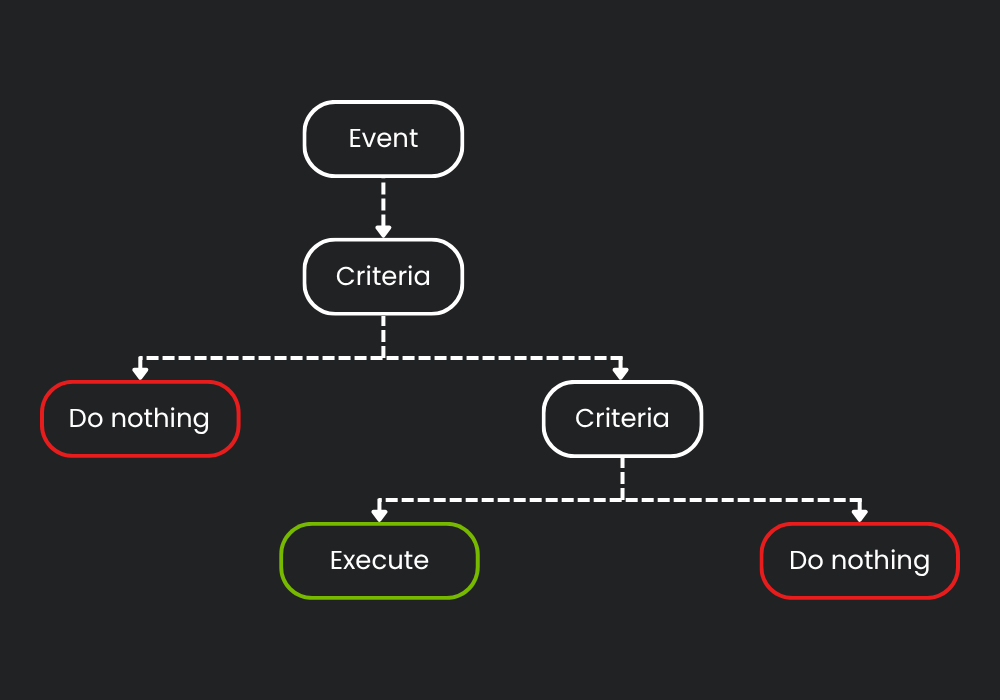
Execution frameworks should follow simple, repeatable rules. Don't rely on guesswork or gut-feel. Instead, look for pre-defined criteria that tell you exactly when a trade is valid — and when it isn't.
✓ Clear, repeatable rules
✓ No emotion, no discretion
✓ Clean no-hesitation trading
Simple
The most effective strategies should be able to be written down on a piece of paper. No complexity. Because complexity doesn't lead to consistency. Complexity leads to over-analysis, second-guessing & hesitation. Effective strategies should be simple to follow, desperately easy to spot & not reliant on confusing indicators.

The Result Is A Trading System Which Gives YOU...
Introducing The Setups
Overviews & Profiles
Vector: Your Intraday Weapon
Exploit clean momentum & direction from key market turning points. Designed to capitalise on short-term moves with speed & precision. An intraday-specific strategy, Vector provides regular, predictable setups that allow for consistent trading opportunities.
Objective: Leverage short-term directional opportunities
Entry Time Frames: Intraday environments
Profile: Active, fast trades
Time Frames: Liquid pairs & futures
Trade Regularity: High
Continuation Play: Your Everyday
A universal continuation model. Ideal for traders that want to consistently trade over different time frames. This model uses market structure aligned with existing momentum & direction, exploiting opportunities where further price continuation is probable.
Objective: Position into pre-existing momentum
Entry Time Frames: Any
Profile: Pattern-based setups
Compatible Markets: Any
Trade Regularity: Medium
The Retrace: Your Sniper Entry
A reversal trade designed to exploit key market turning points. Whether at defined support & resistance or in key structural areas, The Retrace offers a superior strike rate rewarding patient & disciplined execution, however, offers less opportunity frequency.
Objective: Exploit probable reversals at key areas
Entry Time Frames: Any
Profile: Selective entries with multiple confluences
Compatible Markets: Any
Trade Regularity: Low
"Vector is a f**king game-changer. Fast trades, regular setups, simple, mechanical — it feels like how trading is meant to be."
Terry H
Full-time trader
Ready To Unlock The Setups?
Any one of these strategies has the potential to transform your trading results.
Get instant access to all 3 of them now...
We keep it simple, sustainable, and repeatable. We treat trading like a recipe: follow the right steps, in the right order, and you get results.
Yes—if they’re willing to treat it seriously. The strategies are designed to be teachable and repeatable. They’re mechanical, rules-based, and backed by clear data, not gut feeling. That makes them ideal for beginners who want structure.
But let’s be clear: they are not magic. You’ll need to learn the foundations, follow the framework, and put in the practise. If you can do that, you’ll be more than equipped to trade them with complete clarity.
The powerful thing about these setups is their flexibility—they work on any timeframe. I personally trade them on the 1-minute to the 1-hour charts, depending on market conditions and my schedule.
The entry logic, structure, and rules remain consistent regardless. As long as there’s clear higher timeframe context, these setups work. Whether you’re looking for a quick intraday move or a more measured swing, you can find a way to make the strategy work for you.
Absolutely not. Or at least not with the right strategy. Our methodology is built for efficiency—structured analysis, key trading points, & minimal screen time. Members need not spend anymore than a couple of focused hours a day at the charts, max.
If you’re looking for a job chained to the charts, this isn’t it. The goal is freedom, not a second desk job.



Copyright 2026 The Trading Lab, all rights reserved.